





-180x100.png)
It would seem that poultry is just poultry. But it turns out that it's not that simple: understanding the differences between broilers and laying hens is critical to their farming. This knowledge helps farmers and technologists to plan production processes correctly and select the right equipment. Each type of poultry has its own characteristics in terms of care, feeding and maintenance. And this will generally help to reduce costs and increase profits. Understanding this truth helps VADA to offer its customers the necessary equipment, taking into account the type of poultry and the scale of the farm at the stage of designing automated systems.
The purpose of poultry farming
Broilers are fast-growing meat birds with a short rearing cycle (6-8 weeks). Due to their rapid growth and high productivity, the investment in them pays off within a short period of time. However, this short cycle requires careful control of feeding and climatic conditions to ensure stable weight gain.
Layers are chickens that lay eggs, and their productivity cycle is much longer – from 20 to 72 weeks. This is a stable profit, provided that the right conditions for keeping poultry are created. Even the slightest fluctuations can affect egg production and the quality of the eggs themselves.
"The choice of equipment and level of automation depends on the purpose of raising this type of poultry. For example, for broilers, it is important to feed them promptly. It is also important to respond quickly to changes in the microclimate in the room. Whereas for layers, it is critically important to maintain stable conditions over a long period. The choice of ventilation systems and feed lines always starts with what kind of poultry the farmer plans to raise," concludes the engineer from VADA.
Chicken growth rates and production cycles
Broilers
The growth rate of broilers can be compared to a marathon, where the main focus is on rapid muscle mass gain. They have a natural tendency to gain weight quickly, allowing them to reach market condition in just 6-8 weeks. To maximise this potential, it is important to optimise all stages of rearing: from feeding to controlling the temperature and humidity in the poultry house. The less time broilers have to grow, the more important each stage becomes, as any disruption in conditions can result in losses in growth.
Broilers grow so fast that every day of their life is a new stage in their development. Therefore, it is important to ensure maximum comfort and nutrients during this short period. Broiler rearing does not allow for "delays" or insufficient attention to conditions, as growth rates can slow down significantly or be ineffective.
Laying hens
Laying hens have a different development pattern. During the first 20-22 weeks, they do not produce eggs, but actively grow and develop. Therefore, this stage of development requires slightly less attention to intensive growth and more to health and ensuring optimal conditions for the further development of egg production.
After that, the egg-laying period begins, which lasts up to 72 weeks. At this time, it is important to provide the birds with stable conditions in order to maximise their egg production. Layers do not grow as fast as broilers, but their long-term productivity requires regular care and maintenance of a high microclimate to maintain the quality and quantity of eggs.
"Stable conditions are important for both types of birds, but broilers require maximum attention during the rapid growth stages, and layers during the long-term egg production stage. The main thing in the automation system is to precisely adjust the feed line and microclimate schedule for each stage of the cycle. This determines whether the birds will reach their maximum potential," emphasises the company's specialist.
Thus, understanding the growth rates of poultry allows you to correctly configure production processes and select an automation system that best meets the needs of each type of poultry.
Poultry housing conditions and microclimate
Temperature, humidity and ventilation are the main parameters that affect the health and productivity of both broilers and layers. However, the requirements for these factors vary for each type of poultry and must be taken into account when organising housing conditions.
Temperature, humidity and ventilation
Broilers are very sensitive to changes in temperature and humidity, as their rapid growth depends on stable conditions. Overheating or cold can seriously slow down weight gain, so a quick response to climate change is needed.
Laying hens are less sensitive to temperature fluctuations, but stable conditions are still critical for normal egg production. Too high or too low temperatures can reduce the number and quality of eggs.
Broilers require a quick response to changing conditions. Even small deviations can affect their growth. Laying hens are more resilient, but prolonged instability in conditions reduces their productivity.
Use of temperature, humidity and CO₂ sensors
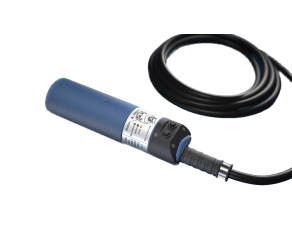
To ensure an optimal microclimate on farms, automated sensors for animal husbandry are used: temperature, humidity and CO₂ level. They allow you to control these parameters in real time, creating comfort for poultry by maintaining stable conditions.
VADA sensors and controllers allow you to automatically regulate temperature, humidity and ventilation, which significantly improves production efficiency and reduces energy and poultry maintenance costs.
"Even small fluctuations in humidity can reduce broiler growth or laying hen productivity," the company says.
Automated feed delivery system
Different types of feed require different feeding systems. Broilers need to receive nutrients quickly in order to grow intensively. Laying hens need a balanced and uniform diet.
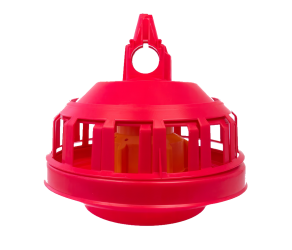
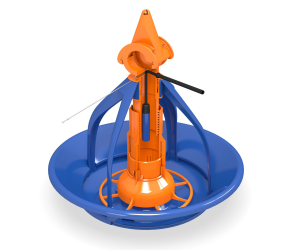
Automatic feed delivery reduces labour costs and, importantly, helps to avoid errors in feed dosing. Chicken feeders should be installed at a suitable height so that the birds can easily reach their food. Nipple drinkers for broilers ensure an optimal water level for the birds.
How to organise the space and type of chicken housing
Broilers are usually kept on deep litter floors. This method of housing is convenient because it provides good air exchange and prevents the development of diseases. In addition, deep litter helps to maintain the necessary level of heat and moisture, reducing the risk of hypothermia or overheating.
The space for broilers should be large enough for the birds to move freely, which promotes better growth and development. It is also important to consider proper ventilation to avoid overheating and air pollution.
For laying hens, cage systems are the most effective method of housing. They save a lot of space and allow for control over the conditions in which the birds are kept. There are various types of cage systems for laying hens, ranging from standard single-tier cages to multi-tiered improved designs that make the most efficient use of space. They are also usually equipped with automated feed and water supply systems, which significantly reduces the need for manual maintenance.
One of the key aspects of cage housing is ensuring proper lighting and ventilation. It is important that each cage has access to fresh air and that the air flow is not excessive so as not to cause stress to the birds.
Ventilation is an important part of any poultry farm, and its effectiveness directly depends on the correct organisation of space and the location of equipment. In the case of broilers, it is necessary to ensure a rapid and even supply of fresh air to prevent the birds from overheating. Ventilation systems for broilers must ensure constant air exchange and rapid removal of excess moisture and heat.
Ventilation must be more stable for laying hens. It is important to maintain uniform air circulation, as sudden changes in temperature or humidity can lead to a decline in egg quality or stress in birds. In cage systems, it is necessary for each tier to have access to optimal airflow.
Biosecurity during poultry farming
Broilers are more prone to gastrointestinal and respiratory diseases, while laying hens suffer from metabolic disorders or egg infections. It is precisely the automation of climate control that allows the risks of infection to be reduced to zero. Disinfection, air circulation and humidity control are essential for maintaining poultry health, according to VADA experts.
Return on investment for broilers and laying hens
The payback period for poultry is an important factor in determining the effectiveness of investments in poultry farming. Broilers and laying hens have different payback periods, and this should be taken into account when planning farms.
Broilers have a very short growing cycle of only 6-8 weeks. This means that they can generate profits much faster than laying hens. Fast ROI is the main advantage of broiler farming. This model is particularly suitable for those who want a quick return on their investment. However, it should be noted that rapid growth requires careful control of feed, temperature and housing conditions.
Laying hens have a longer payback period. They only start laying eggs after 20-22 weeks, and their productivity can last up to 72 weeks. This means that the farmer will not receive the first profit from eggs until at least six months later. However, the long cycle has its advantages. Once they reach peak egg production, laying hens can provide a stable income over a long period. This is suitable for farmers who are looking for stability and regular income from egg production.
"For start-up capital, broilers are more profitable due to their shorter payback cycle, but farmers may face higher maintenance costs as they need to regularly renew their flock. For long-term scaling, layers may be more profitable as they provide a stable income throughout the year. However, this requires a larger initial investment in the maintenance and automation system.
Comparative table of broiler and laying hen farming
| Parameter | Broilers | Laying hens |
| Purpose of rearing | Meat | Eggs |
| Rearing cycle | 6–8 weeks | 20–72 weeks |
| Type of housing | Floor | Cage |
| Space | Less for short cycle | More for long-term housing |
| Climate requirements | High sensitivity to temperature and humidity | Stable microclimate |
| Automation | Feed lines, ventilation, sensors | Feed and egg processing systems |
| ROI | Fast | Longer |
Why are there no universal solutions? Because every farm has its own characteristics: from the type of poultry to the size of the farm and climatic conditions. Broilers and laying hens have different needs, so raising each species requires an individual approach to the selection of equipment and automation systems. Taking these factors into account allows us to select the optimal solutions for each specific farm.
The company has many years of experience in designing automated systems for poultry farming, in addition to selling and installing poultry farming equipment. VADA engineers understand the specifics of different types of poultry and farm sizes, so they offer solutions that best meet customer requirements. All factors are taken into account, from the microclimate to the automation of feed lines, allowing farmers to get the most out of their investments.
06/01/2026