
-180x100.png)
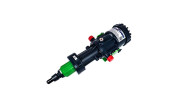
Feeding is one of the most important components of poultry production technology. Correctly formulated rations and uniform feed supply will ensure good stock performance and economic efficiency of the farm. That is why the use of the latest equipment for automatic feed feeding is extremely important. Modern feeders promote health and make feeding easier.
Role of feeders for feeding
The biggest benefit of using a feed feeder mechanism for chickens is the even distribution of food throughout the flock. Modern systems help to avoid situations where some of the birds are underfed or overfed. This promotes even growth and development.
Automated feed delivery maintains a high level of sanitary conditions in the house. The risk of food coming into contact with litter is minimized and significantly reduces the likelihood of disease spreading among the birds.
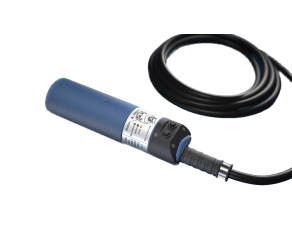
Intelligent feeder designs allow the amount of feed to be clearly controlled, preventing overconsumption. Automated systems are equipped with sensors that regulate the amount of feed according to the needs of the birds. This helps to avoid unnecessary costs and improves the environmental performance of production by reducing waste.
Which feeder should I choose?
A wide range of feeders allows the farm to choose the right one for a number of parameters. Here it is important to consider the area of the house, the number of birds and, of course, the financial possibilities of the poultry farm.
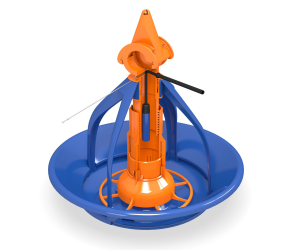
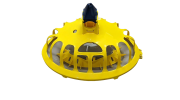
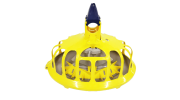
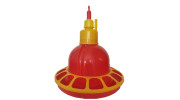
For small farms there are budget feeders of hopper and bowl type (round or oval), which are placed on the floor of the room in a convenient position. This will provide free access of birds to the food distributed by workers. The price-quality ratio of such feeders makes them popular.
In large agro-formations there is an automated feed system. Vada engineers recommend a trough feeder arranged in several rows, with water between them. Then the birds will have uniform access to food, move around less and therefore gain weight better.
The automatic feeding system is a real optimization of the process, the advantages of which can hardly be underestimated:
- feed is fed continuously and, as a result, stable weight gain will occur;
- minimizing the intervention of the staff saves them time.
- The feed is evenly distributed throughout the house.
All these factors have an impact on increasing the company's income.
Hopper feeders are used when feeding loose and granular feed to animals directly into the cages. Among the advantages can be emphasized:
- ease of use,
- ergonomics,
- economy of feed (it is not scattered, and at the same time gradually poured as the bird eats it),
- hygiene,
- control of consumption and satiety of the flock.
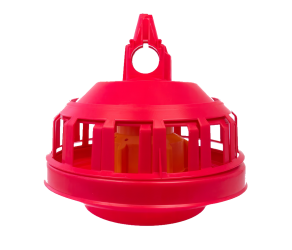
Hanging feeders are convenient feeding devices that are suspended at a certain height above the floor surface. They are designed to provide chickens with constant access to feed, preventing contamination and scattering.
Why choose Vada?
Vada offers a wide range of hanging and hopper feeders for poultry, made from high quality materials that are resistant to the environment. They differ in size and are designed for different types of animals: birds, pigs, rabbits, taking into account the peculiarities of each. Let's say, the automatic feeding system for hens is somewhat different from the feeding system for roosters. Everything to keep your livestock fed.
At Vada you will find the right feeder at an affordable price. Our managers will offer you the best solution for your request.
Feeder maintenance: what to consider?
Automated poultry feeders ensure sanitary conditions in poultry houses. It minimizes the risk of food coming into contact with excrement. This reduces the spread of disease among the flock. The uninterrupted supply of feed keeps them from feeling hungry. Hence the constant weight gain and egg-laying performance of the hens.
The room and feeder system should be cleaned each time the rearing cycle is completed so that the next batch of chickens can move in under sterile conditions. The equipment should be stored in a designated place with appropriate temperature conditions. If these requirements are not met, continued use of the feeding systems may be difficult and problematic.
 Augers
Chains
Augers
Chains
 Drops, tees, wires
Electric drives and reducers
Drops, tees, wires
Electric drives and reducers
 Feed pipes
 Feed receiving hoppers
 Hoppers
Spare parts for feed
Hoppers
Spare parts for feed
 Filters