

















-180x100.png)


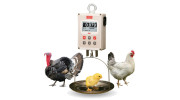
Heating in animal husbandry and poultry farming is not only a matter of comfort, but also of productivity, livestock health and farm profits. When an animal is cold, it spends its energy on warming up rather than growing. When it is hot, it is also bad: appetite deteriorates and productivity decreases. The other side of the coin is when heat is distributed unevenly, in which case the farmer incurs excess feed costs, mortality, respiratory problems and unstable results.
Therefore, an effective heating system must work in sync with ventilation and automation.
Why it is important to consider animal biology in a heating project
Pigs are very sensitive to temperature fluctuations, especially piglets. Different groups require different conditions. For example, the most comfortable temperature for piglets is 28-32 °C, for growing pigs – 20-24 °C, and for fattening pigs – 18-20 °C.
Failure to comply with these requirements will have disappointing consequences:
- feed wastage of up to 25%,
- a 15-30% reduction in weight gain,
- an increase in disease,
- uneven development of animals.
In piggeries, it is important to consider group housing and stocking density. Animals partially warm each other, so a properly designed system can reduce heat loss without wasting energy. "Most often, we see not a lack of heating power, but its incorrect distribution. Part of the room overheats while the other part remains cold. This is what causes the main losses," comment engineers from VADA.
Poultry reacts to temperature changes even faster than pigs. Even a seemingly insignificant 1-2°C will affect the behaviour and well-being of the flock, as well as their appetite. For broilers, the temperature regime changes gradually with each week of growth. At the same time, not only the temperature is critical, but also the uniformity of heating throughout the entire area of the poultry house. Why is this dangerous? Poultry will gather in warm places, causing trauma due to crowding, and growth will be uneven. According to experts, the temperature in the poultry house should be the same for all birds, not just under the sensor. It is this unevenness that is the main cause of problems. Proper heating of poultry houses ensures uniform heating and stable bird growth.
Temperature regimes for pigs and poultry
| Parameter | Pigsty | Poultry house |
| Initial temperature | For piglets: 28–34 °C; for sows: 16–20 °C; for fattening pigs: 14–20 °C | Young stock (1–7 days): 32–35 °C |
| How to change the temperature | Gradually, zone by zone (so that the piglets get used to it) | Strictly according to the daily schedule |
| Permissible fluctuations | Slight deviations are acceptable, not critical | Small fluctuations, even 1–2 °C, can stress the birds |
| Consequences of mistakes | Piglets consume more feed and grow more slowly; up to 25–50% feed overspending, 15–30% lower growth rates | Poultry react quickly to cold/heat; diseases may occur and growth rates may decrease |
Heating systems: what is best for farms
Different approaches are needed for piggeries and poultry houses, as the biology of the animals, stocking density and husbandry regimes differ significantly. Piggeries require uniform, stable and controllable heat. Here, it is not the speed of heating that is important, but the ability of the system to maintain the set temperature without sudden fluctuations. Several solutions are used in practice. Effective heating of piggeries is critical for the growth of young animals and feed savings.
Water systems are considered one of the most economical heating options. They distribute heat evenly throughout the room, do not dry out the air and are easily integrated with automation. As a result, a stable temperature is achieved in all areas, relatively low operating costs, if everything is designed correctly, and a long service life. The only thing to pay attention to is that they require accurate thermal calculations. Without a design, such a system can become expensive to operate.
Infrared lamps and panels are usually used for local heating of piglets. Infrared heat warms not the air, but the surfaces and body of the animal, which is especially important for newborns. With this type of heating, we get a quick effect and a reduced risk of hypothermia. However, these panels are not effective as the main source of heating.
In recent years, underfloor heating has become popular, which is installed in the rest areas for young animals. Piglets receive heat from below and a comfortable environment for growth. But remember that underfloor heating almost always works in conjunction with a water heating system.
In a pigsty, ventilation constantly removes some of the warm air. If the heating is not synchronised with it, the farm literally ‘heats the street’. That is why engineering systems are configured so that the heating compensates for heat loss and does not work at random. Automation of pig farm heating helps to avoid fuel overconsumption and maintain an optimal temperature regime.
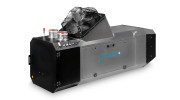
Poultry houses require fast, powerful heat, especially in the early days of poultry rearing. The most popular solution for large poultry complexes is considered to be gas heaters. They quickly heat the air and allow for precise temperature control. That is why there are many requests on the internet about where to buy a gas heater for industrial use. It provides rapid heating, has high power and is economical in large volumes of use.
Infrared brooders in poultry houses are used for local heating. They create a comfortable warm area where chicks can warm up without overheating the entire room. In remote farms, it is profitable to buy a diesel heater for autonomous heating.
Automatic control of heating systems allows you to maintain the exact temperature without wasting fuel. Unlike outdated solutions, the system provides heat only when and in the amount that is really needed. As a result, the farm saves resources and achieves more stable production indicators. ‘When the system operates in automatic mode, the farmer only pays for the heat that the animals actually need. In manual mode, there is almost always overspending,’ concludes VADA.
Comparison of heating systems
| Type of heating system | Where used | Advantages of heating systems | What to consider |
| Water fan heaters | Piggeries | Heat is distributed evenly, without harmful gases | Installation cost, long pipes can reduce efficiency |
| Infrared lamps/panels | Piglets in piggeries | Energy efficient, quickly warms the animal, no draughts | Localised heat, additional source required for the entire room |
| Underfloor heating | Pigsties, piglet rearing | Comfortable resting area, even heat | Does not heat the entire room, may become dirty |
| Gas heaters | Poultry houses | Quickly heats a large volume, easy to use | Gas emissions, requires good ventilation |
| Diesel heaters | Poultry houses | Mobile, heats quickly | Smoke emissions, requires maintenance |
| Infrared heaters (brooders) | Poultry houses, young stock | Spot heating, energy saving | Small area of effect, additional source required for large rooms |
Why it is important to order a professional heating design and installation
As you can see, heating is not just a set of necessary equipment, but an entire engineering system that includes:
- thermal calculations,
- selection of equipment for specific farm conditions,
- proper placement and professional installation,
- maintenance.
Without this, even the best industrial heaters will not provide the expected heat at a reasonable cost. ‘When a farmer orders a project, he saves more than just on paper. These savings are more global: on fuel, electricity, and feed throughout the entire life of the system,’ the company's experts emphasise. That is why livestock equipment should be selected together with engineers who understand not only the technology, but also the technology of animal husbandry.
As you can see, a lot depends on the correct temperature regime on the farm, and this is not only the comfort of the animals, but also the profitability of the entire farm. Modern heating systems for farms, combined with automation, can reduce costs, increase growth and make production predictable. Modern livestock equipment helps maintain a comfortable microclimate and reduce operating costs. VADA has practical experience in designing and implementing engineering solutions for livestock and poultry farming. That is why contacting specialists is the first step towards an effective and intelligent heating system. And if you are planning to renovate or build a new farm, start with the right engineering solution.
21/01/2026