














-180x100.png)

If you plan to raise chickens in your household, you can buy a small incubator or choose a hen. How to do this? Because not every breed has a pronounced instinct for incubation and care for offspring. Let's share with you some secrets that will help you get healthy young.
Which breed of chickens are the best hens
Before we start reviewing chicken breeds, let's figure out: who is a good hen? First of all, she has a desire to incubate eggs - often the hen stays even in an empty nest. She is calm and balanced, which is very important for safe care of the chicks, and at the same time aggressive towards other animals and people, thereby protecting the offspring.
And now let's move on to the breeds that best demonstrate these qualities.
One of the best are considered to be cochinchins - these are chickens with lush, soft plumage, which helps them cover eggs and chicks well. They are calm and gentle. Cochinchins easily hatch the eggs of other birds (ducks, turkeys) and also lead them. They do not leave the nest until all the chicks have hatched.
Orpingtons are chickens of English origin and have good hen data. They are large, famous for their docility and care for chicks. Hardy, easily adapt to different climates and willingly sit on the nest.
The gate is also famous for its pronounced maternal instinct. These chickens are also wonderful hens.
Ukrainian red is a national breed. An unpretentious, hardy chicken and a responsible mother of her chicks. It can sit on the nest several times during the season.
The choice is considerable, and each breed will cope well with its task.
What to give chickens to lay eggs
And did you know that the formation of the laying instinct in chickens is not only a matter of breed, but also of competent care, nutrition and conditions of detention?
The correct diet directly affects the hormonal balance of the bird, in particular the level of prolactin - a hormone that activates the same instinct. Protein is the basis for the synthesis of hormones. Its insufficient amount suppresses reproductive function and reduces the desire to incubate. Vitamins of group B (B1, B2, B6 and B12) strengthen the nervous system of chickens and help reduce stress. And minerals such as calcium, phosphorus, magnesium and selenium are important for the proper functioning of the endocrine glands.
A calm environment also has a positive effect on the general well-being of chickens, because they are very sensitive to changes in the environment and noise. Otherwise, the level of prolactin decreases and the desire to sit on the nest disappears. It is best to set it up in a quiet, calm place with few external stimuli.
Light. It also affects the biorhythms of chickens and their hormonal activity. In order for a chicken to want to become a hen, she needs to reduce the duration of daylight hours - to 10-12 hours. And excessive lighting (over 14 hours), on the contrary, stimulates egg laying, but inhibits incubation.
When does a hen sit and how long does she sit?
Most often, the incubation instinct is activated in the spring - from March to June, when the length of the day and the air temperature are optimal. Breeds with a strong maternal instinct can sit in the summer, but this happens less often. It is especially important to provide comfortable conditions in the first days when a hen sits, because it is during this period that she is very sensitive to stress and temperature changes, and embryos - to stable heat.
By what signs can you track the readiness of a hen to sit on the nest? She is constantly in it and does not want to leave, even if there are no eggs. Her belly areas swell and become bare, the so-called maternal spots for better heat dissipation. She fluffs her feathers and angrily defends herself if you approach the nest, making low sounds similar to grunting. She does not go to the roost at night, but remains in the nest.
Before you put the hen on the eggs, you can check her desire for truthfulness. How? Put her in the evening or at night on several laying eggs for 1-2 days. If she does not leave the nest, the hen is ready.
The overall result of hatching chicks is also affected by the quality of the eggs - they must be fresh, 5-7 days old. They cannot be washed, they must be of the correct shape, without cracks and deformations.
It is important to remember how many weeks the hen sits - usually it is three weeks, or 21 days, during which it is necessary to maintain the proper microclimate. If not all the eggs hatched within this period, you can leave them in the nest for another 1-2 days after the first chick hatches. If the situation does not change, carefully remove them from there so that the chicks do not become infected.
Optimal microclimate—the key to successful hatching of chicks
The correct temperature and humidity regime is one of the important factors that affect the healthy development of embryos in eggs and the friendly hatching of chicks. And although the hen herself regulates the temperature and humidity under her, the correct microclimate for chickens in the room is still of great importance.
The optimal temperature for the incubation period is considered to be 18-22°C. In a cold room, the hen will spend more energy on heating, she will get out of the nest more often and will not maintain the temperature of the eggs well. Excessive temperature can affect the slowdown of embryo development. Humidity - 55-60% in the first two weeks of incubation. And on the 18-21st day it is better to increase it to 65-70% - this will help the chicks break the shell more easily during hatching.
The best conditions for the development of laying hens from “VADA”
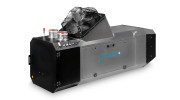
The “VADA” company offers microclimate control systems adapted to the needs of small and medium-sized poultry farms. Ventilation units, automatic temperature and humidity control - all this helps to create ideal conditions for the hen and increases the hatching of young. We offer equipment that has proven itself in practice as reliable, energy-efficient, easy to maintain. Our specialists will help you choose the right model and install it in the room.
21/05/2025