







-180x100.png)

28/10/2024
Choosing the right ventilation system for livestock production is critical for animal health and farm productivity. High-quality ventilation on the farm allows you to control the microclimate in the premises, remove excess moisture, carbon dioxide, ammonia and other harmful gases that can have a negative impact on animal health.
Importance of ventilation in animal husbandry
- Improved animal health. Proper ventilation helps avoid the development of respiratory diseases common among animals in confined spaces.
- Temperature and humidity control. The ventilation system makes sure that there is no overheating in summer and excessive humidity in winter, which is important for the comfort of the animals.
- Reduction of harmful gases. Gaseous decomposition products such as ammonia and carbon dioxide can irritate the respiratory tract of animals and humans, and ventilation helps to remove them in a timely manner.
The main types of ventilation systems, their advantages and disadvantages
There are several types of ventilation systems in animal husbandry. The choice depends on the type of animals, climate, room design and other factors.
Natural ventilation - air circulates due to natural flows created by the temperature difference between the outside and inside of the room, as well as through open windows or fans. Advantages include energy efficiency and ease of installation, low operating costs. Disadvantages include dependence on weather conditions, limited control over humidity and temperature levels. It is less effective in rooms with a high density of animals.
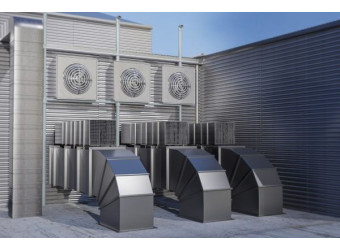
Mechanical ventilation uses livestock farm fans to force air circulation, allowing controlled ventilation regardless of weather conditions. This allows precise control of the microclimate and humidity; suitable for facilities with large numbers of animals, but such ventilation requires the supply of electricity and increased energy costs, as well as regular maintenance.
Combined ventilation (hybrid) combines natural mechanical ventilation, using fans when necessary to increase air exchange. Among the pros of this type are flexible control of conditions; energy efficiency by using mechanical ventilation only when needed. However, it is more difficult to install and set up; requires professional maintenance for proper operation.
Heat exchange ventilation systems (recovery ventilation) use heat from exhaust air to heat fresh air supplied to the room. This helps to retain heat in the winter. When using such a system, heating costs are reduced; a stable temperature in the premises is maintained throughout the year. The disadvantages include high initial cost and difficulty in maintenance, especially for large farms.
How to choose a ventilation system for a farm?
Choosing a ventilation system for animal housing is an important decision that depends on a number of factors: animal housing conditions, climate, type of farm and financial capacity. Let's look at how these conditions affect system selection and how to find a balance between cost and efficiency.
Housing conditions and animal density. Enclosed areas with high animal densities (e.g. poultry or pig houses) require particularly careful control of air quality, so mechanical or combination ventilation is usually chosen. This allows for precise control of the amount of air exchange, which is critical to animal health. Semi-open spaces or open-air farms (e.g. cattle) can use natural ventilation with additional vents. This is more economical and suitable for animals that can tolerate temperature changes.
Exposure to external factors (climatic conditions). For farmers in colder regions, it is important to choose a system that will help keep heat in the room. In such cases, heat recovery systems with heat exchange that utilize the heat of the exhaust air to heat fresh air are well suited. This helps to reduce heating costs, especially in winter. In warmer regions, where high temperatures can be stressful for animals, intensive cooling and heat removal must be provided. Mechanical ventilation systems with ventilation units can cool the room quickly, providing comfort for the animals.
Depending on the type of animal, the appropriate ventilation system is chosen. For example, poultry is very sensitive to air quality and temperature, so for poultry houses it is better to choose mechanical or recuperation ventilation that provides stable climate control. Combined systems are suitable for pig houses. Cattle are less sensitive to climate change, so natural ventilation may be sufficient for open areas, while in closed barns it is advisable to consider a combined humidity and gas control system.
Given the important role of ventilation in livestock buildings, various factors should be taken into account before selecting the right system:
- assess the needs of the animals in terms of their sensitivity to microclimate changes;
- analyze climatic conditions: how often your farm experiences temperature fluctuations or high humidity to select a system that will provide optimal comfort for the animals in any season;
- assess energy costs: choose systems with the lowest energy costs or that allow you to utilize them when needed;
- consider automation: modern systems with sensors and automatic controls allow you to maintain an optimal climate without constant manual intervention, reducing the risk of human error and increasing efficiency.
Why contact Vada for advice?
Recognizing the importance of ventilation in livestock buildings, Vada offers a wide range of ventilation equipment. The experience and expertise of our specialists will help you find the right solution for your specific needs. The microclimate on livestock farms is the key to healthy livestock. With this approach to business you will be able to equip together with the managers of the company quality ventilation equipment in livestock houses.
28/10/2024