

-180x100.png)
A properly configured microclimate can save tens of thousands of hryvnias per year. Do you agree with this opinion? After all, savings do not start with cheap equipment, but with proper design and air flow management.
In this article, we will look at typical mistakes made by farmers, the role of each microclimate system and, most importantly, how savings are achieved not through cheapness, but through proper management.
Common mistakes in microclimate management
Savings on design and calculations
Choosing equipment without thermal and ventilation calculations leads to systems operating with overloads or underloads, increased energy consumption, and the formation of air stagnation zones. Therefore, it is important to start with an engineering design, not an equipment catalogue.
Lack of a control system
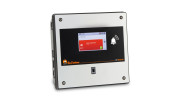
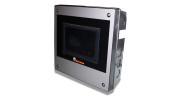
Some farms are managed manually or have partially automated processes. As a result, there may be a delayed response to changes in temperature, humidity, and carbon dioxide. To avoid this, a microclimate control system should be used as a control centre.
Unsynchronised operation of systems
Ventilation, heating, and cooling do not work as a single organism, and then we have a situation, for example, when heating occurs with excessive ventilation. It is important that all systems work as a single algorithm.
Ignoring seasonal changes
This means that the farm operates with the same settings in winter and summer. As a result, there is energy overconsumption, stress and poor health in the birds. How to avoid this? Each system must operate according to seasonal requirements.
Focusing only on cheap equipment
By purchasing cheap equipment and components, you risk frequent repairs, unstable farm operation, and hidden, unexpected costs. Therefore, it is better to evaluate equipment based on its efficiency, not just its price.
Lack of regular maintenance.
Some people like to work "until something breaks." Remember, production efficiency is at stake! Therefore, it is better to perform scheduled maintenance — it will be more reliable and cheaper.
Excessive human factor
If you rely solely on the operator, you may get different microclimate quality during different shifts. To avoid this, it is better to set up automation and rest assured. "Most often, farmers think they are saving money by simplifying the system. But in practice, the opposite is true. Without design calculations and automation, the microclimate becomes uncontrollable: today it is cold, tomorrow it is overheated, and the day after tomorrow it is humid. As a result, the farm loses more on energy, feed, and productivity than a normal engineering scheme would have cost from the outset," explains Alexander Zhilinsky, an engineer at VADA.
| Mistake in organising the microclimate | Consequences | How to avoid negative consequences |
| Lack of calculations for the microclimate project | Overuse of energy and resources | There must be an engineering project |
| No control system | Slow response | Install automated control |
| Unsynchronised systems | Conflict between heating and ventilation | Apply a single control algorithm |
| Ignoring seasonal changes | Stress in poultry | Adjust the system for the season |
| Cheap equipment | Frequent system failures | Assess efficiency |
| No maintenance service | Decline in productivity | Comply with maintenance regulations |
| Human factor | Unstable conditions | Use automation |
Why microclimate is the key to savings on a poultry farm
Temperature, humidity and air exchange affect:
- feed conversion,
- weight gain,
- immunity,
- mortality rates.
It all seems pretty straightforward. When birds are cold, they use energy to keep warm. When it's hot, their appetite goes down and productivity drops.
A poorly adjusted microclimate always entails hidden financial costs, which, incidentally, are not always visible in reports but are clearly reflected in the cost price.
Ventilation systems as the basis for energy efficiency
Ventilation is not just about supplying air. It also involves CO₂ control, moisture removal and maintaining the optimum temperature. Outdated ventilation systems often result in heat loss in winter and excessive electricity consumption. This is in contrast to automated ventilation systems, which regulate the volume of air according to actual needs. "Proper ventilation does not so much cool the poultry house as stabilise it," says Alexander Zhilinsky, an engineer at VADA.
Heating system: how to avoid overspending
It is no secret that heating is one of the largest expenses. If you take "with a margin", you can get constant overheating and, again, unnecessary expenses. And when the heating works in sync with the ventilation, the results are pleasing in terms of poultry productivity.
Lighting system and its role in reducing costs
Daylight affects the biorhythms of poultry. It determines feed consumption, activity and productivity. With automated lighting, you can adapt programmes to the age of the poultry, avoid excessive electricity consumption and ensure adequate behaviour of the flock.
Microclimate control system – the key to real savings
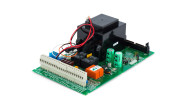
In simple terms, the control system is also called the "brain" of the farm. This is because it coordinates ventilation systems, controls the heating system, regulates the cooling system and synchronises the lighting system.
In addition, it minimises the human factor, helps to respond quickly to changing conditions and saves energy without harming the birds.
A comprehensive approach is the most cost-effective solution
Savings on a poultry farm do not start with cheap equipment, but with ventilation, heating, lighting and microclimate control working as a single system. This is the only way to reduce electricity and feed costs and ensure that the birds grow healthy and productive.
The synchronised operation of the systems minimises the human factor, stabilises temperature and humidity, maintains the activity of the livestock and gives the best possible results.
That is why the professional selection of equipment for animal husbandry is based on a comprehensive approach. This is, in fact, the basis of the work of VADA engineers at the microclimate design stage. "Microclimate is not about individual devices. It is about a system that has to think for the operator, adapt to the season and real conditions, and work stably 24/7," concludes Oleksandr Zhilinsky.
Frequently asked questions from farmers
What microclimate is considered optimal?
A stable microclimate that corresponds to the age and type of poultry and does not have sudden changes in temperature, humidity and air exchange is considered optimal.
Is it possible to save money without automation?
Yes, but such savings are always temporary. Without automation, it is difficult to maintain stable conditions, which over time leads to losses.
Which system most often causes overspending?
Overspending most often occurs due to unsynchronised ventilation and heating, when the systems work against each other.
How can you tell if the microclimate is set up incorrectly?
Problems with the microclimate are indicated by the behaviour of the birds: decreased productivity, stress, lethargy or uneven activity.
Does the choice of systems depend on the size of the farm?
Yes, the size of the farm affects the choice of equipment, but the basic principles of creating an effective microclimate remain the same.
13/01/2026