




-180x100.png)

Power planes: how to choose and use them correctly
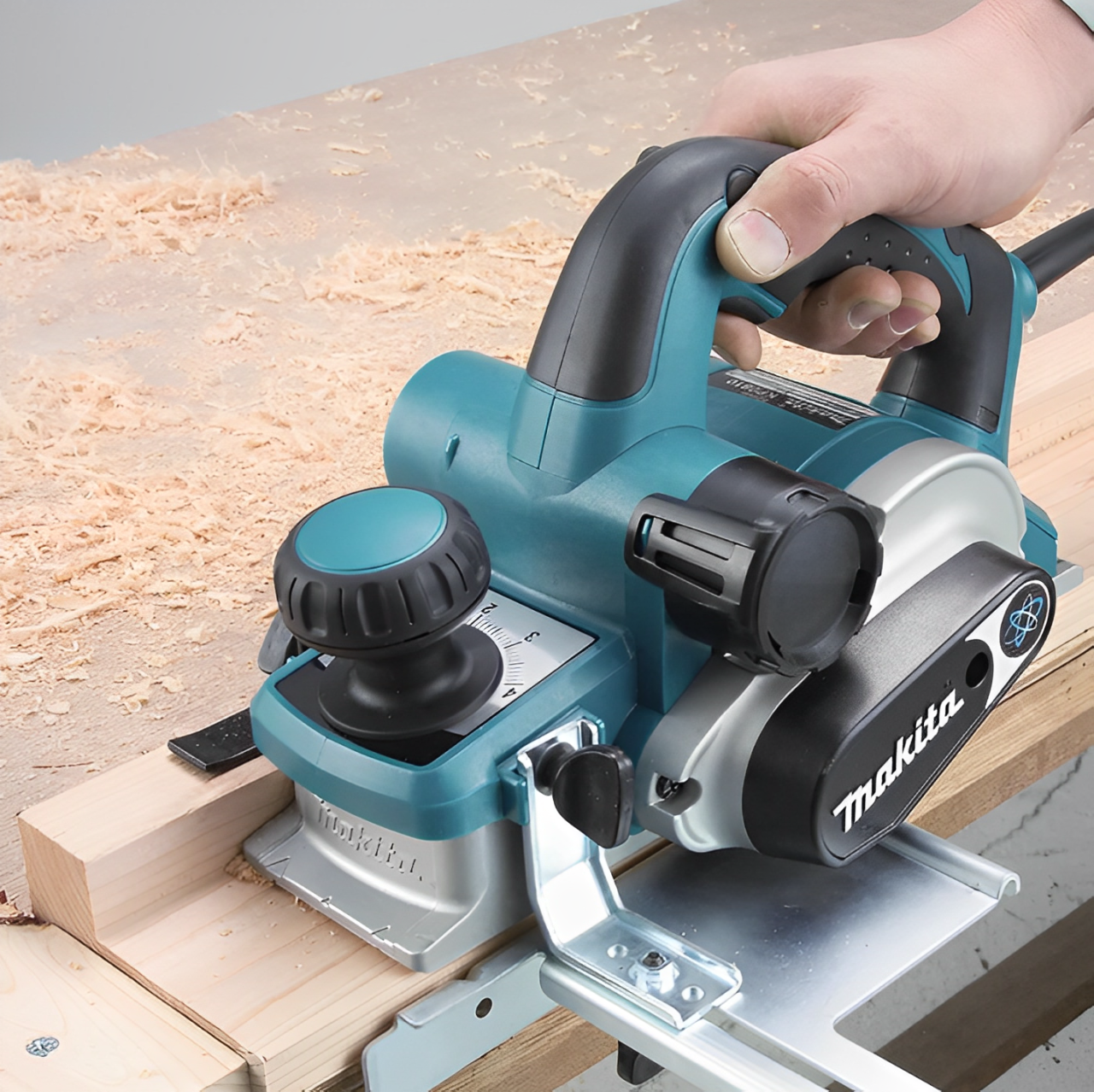
To perform work such as planing, assembling furniture or cutting grooves, you will need a planer. To simplify the work of a craftsman, we recommend that you abandon old manual planes and give preference to a more modern tool - an electric planer.
This tool not only planes, but also allows you to sample a quarter, adjust wooden parts to the required dimensions, chamfer and perform other types of work. Powerplanes are useful for small home repairs, such as roofing, as well as large-scale construction.
What is an electric planer for and why is it important?
An electric planer is a specialised piece of electrical equipment designed for planing. It can be powered by mains or battery. The tool is designed for levelling and sanding wood. It is used after the primary processing of lumber. This device makes it possible to eliminate wood defects, making it perfectly smooth.
Electric planers are used in construction and furniture production. Carpentry work with such a tool is much faster, which is why electric planers are used both in professional and domestic activities. In addition to planing, most devices allow you to
- adjust the material to the required size
- create grooves
- cut chamfers;
- make protrusions on the edges of bars or boards for their subsequent connection.
These are the main functions for which an electric planer is needed. However, there are actually many more, for example, the user can adjust the position of the front of the platform using a button or handle. This allows craftsmen to control the depth of planing. Another function of the electric planer is the quartering with the help of a stop. It forms a 90-degree angle between the material and the equipment, limiting the processing area. This allows you to plan wood without removing excess material.
How does an electric planer work?
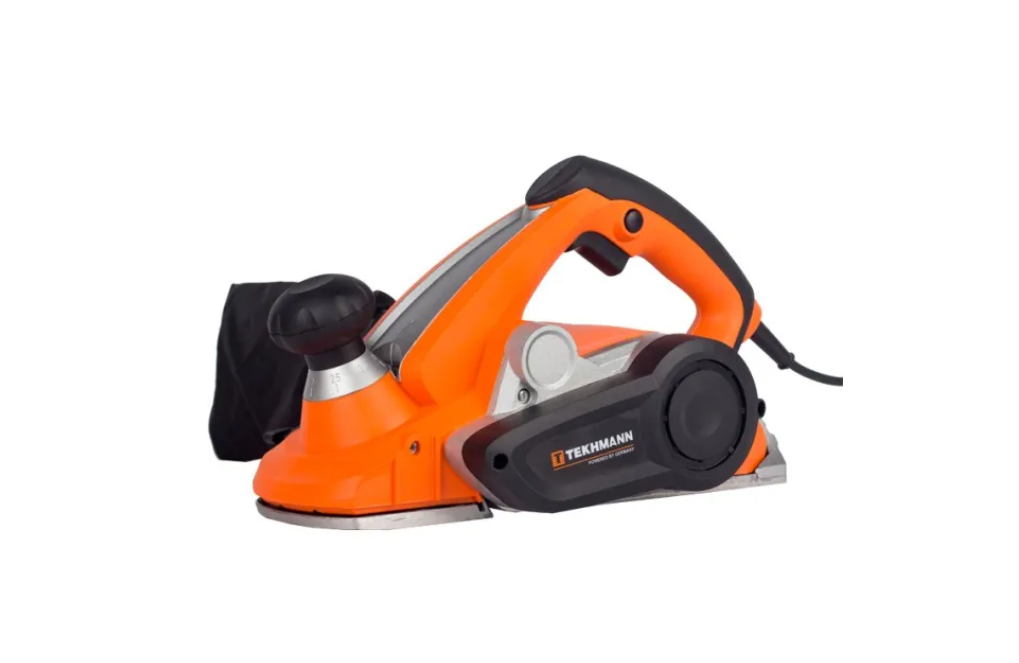
A modern electric planer from Makita and other manufacturers is nowadays used in various industries to perform a variety of tasks. In order for the work to produce the necessary results and meet all safety requirements, you need to follow some tips:
- Secure the workpiece to be processed and free it from unnecessary parts, such as nails or screws.
- Adjust the depth of cut by turning the appropriate knob.
- Determine the side where the chips will be discharged. This is where the chip bag should be connected.
- Connect the tool to the mains and place its front part directly on the workpiece. Make sure that the blades do not touch the surface to be processed.
- Switch on the equipment.
- Start work by applying the main pressure to the front of the power tool. Do not make sudden jerks and movements, the work should be done smoothly.
- Lift the tool slightly when the blades touch the surface of the material.
By following these tips, nail technicians will be able to accurately remove a layer of wood and achieve a perfectly flat surface. Be sure to choose the right planing depth and speed for the material and the task at hand.
What features should an electric planer have?
Before you buy the equipment, you need to understand what functions an electric planer should have. The functionality of an electric tool allows you to increase the convenience and efficiency of your work. The basic characteristics of this type of equipment include:
- the ability to adjust the depth of cutting and planing, as well as the speed of rotation;
- availability of different guides (45-degree and parallel);
- double blades for high processing efficiency;
- chip removal system;
- comfortable handle and correct balance;
- anti-vibration system;
- motor protection against possible overheating.
Additional features that are available in different models of electric planers include a lock to secure the equipment in an inverted position, a side stop, an angle stop, and wavy knives.
Features of an electric planer: important functions and characteristics
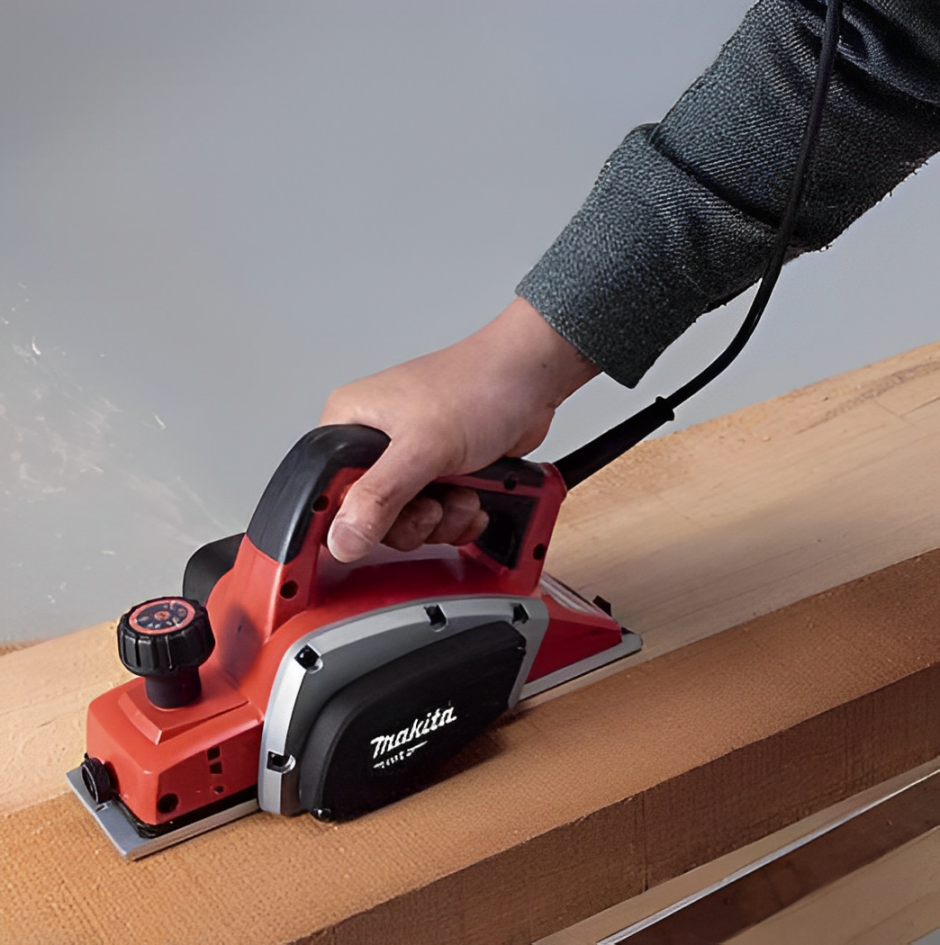
Many craftsmen who regularly work with wood are wondering how to choose an electric planer. To choose the right tool, we recommend paying attention to the following criteria:
- Power. Today, the market offers models with a power of 500-2500 watts.
- Planing width. You can purchase equipment with this indicator from 60 to 300 mm.
- Drum rotation speed. Tools are offered with a range of 10-20 thousand revolutions per minute. The higher the rate, the smoother the finish.
- Depth of planing. It is worth focusing on the type of wood and the quality of the lumber.
- The number and finish of handles. An electric planer with 2 rubberised handles is easier to handle. The device will be easier to hold steady.
- The material of the knives. There are electric planes with steel or carbide knives.
- Type of power supply. Electric planers can be mains or rechargeable.
You should also pay attention to the availability of additional features. For example, protective options, chip collectors, etc.
Selection of an electric planer in the VADA online store
The VADA online store offers a wide variety of electric planes: mains, cordless, with different power, depth of cut, etc. The catalogue offers only high-quality tools from well-known manufacturers, which are distinguished by excellent technical characteristics, convenient design and durability.
Contact VADA managers for advice. We will help you choose the best model for your needs.
 Filters
- Сторінка
- 1
- 2