
-180x100.png)
 Filters
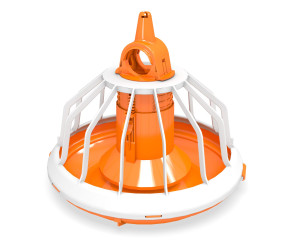
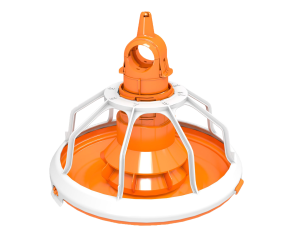
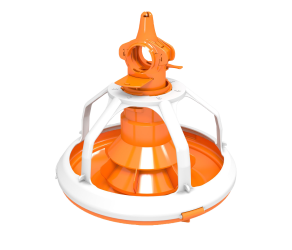
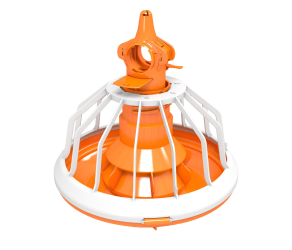

Feeders for broilers: features and importance in poultry farming
To achieve maximum productivity in poultry farming, especially when fattening crossbred broilers, it is important to ensure optimal conditions for their maintenance and feeding. The broiler feeder plays a central role in this process.
This is not just a container for feed, but a specialised piece of equipment for broilers, designed with the physiological needs of fast-growing poultry in mind. It is designed to minimise spillage and contamination of feed. Broilers require a high-calorie diet, which must be available practically around the clock.
If weaker individuals are unable to eat properly due to competition or inconvenient design, this will inevitably lead to uneven weight gain. Therefore, the use of specialised equipment for broiler rearing is important for maintaining high productivity and health of the entire flock.
Modern systems allow you to accurately measure and feed the required amount of feed. The use of properly selected feeders for broilers ensures that the birds can realise their genetic growth potential in the shortest possible time.
Types of feeders for broilers
There are various types of feeders for broilers. They are classified according to their design, method of feed delivery and scale of application. The choice of a specific type depends on the size of your farm, the type of housing (cages or floor) and the desired level of automation.
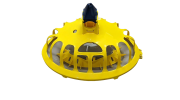
For small flocks or private households, compact models are the ideal solution. These can be simple hopper or tray feeders for broilers with a small capacity (3-5 kg). They are economical, take up a minimum of space and are easy to transport and clean. Such models provide autonomous feeding for 1-2 days.
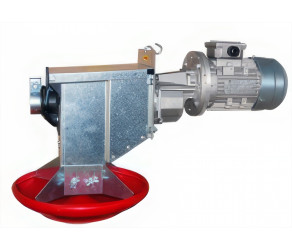
Group and automatic systems are used for large farms and industrial complexes. Automatic feeders for poultry are complex mechanisms that are integrated into the overall feed supply system of the poultry house (screw or chain). They ensure a continuous, even supply of feed around the entire perimeter of the enclosure, which is important for the simultaneous growth of thousands of birds.
Depending on the placement of the structure, they are divided into:
- Table/floor — used for young stock (broiler chickens) and in small chicken coops. They are simple and stable.
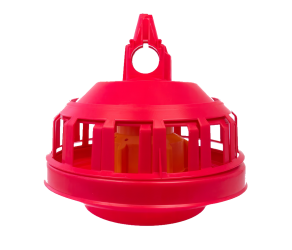
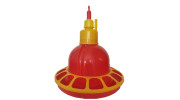
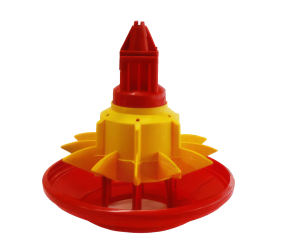
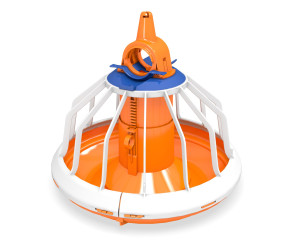
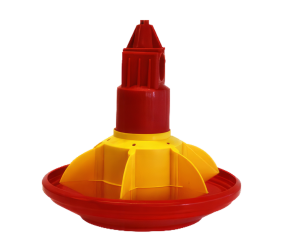
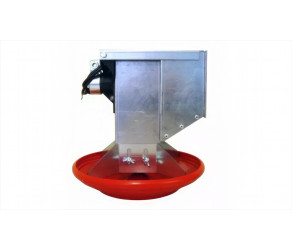
- Suspended (hopper) — feed is poured into the upper hopper and gradually flows into the lower tray. Their distinctive feature is that the height can be adjusted according to the height of the birds, which prevents feed spillage.
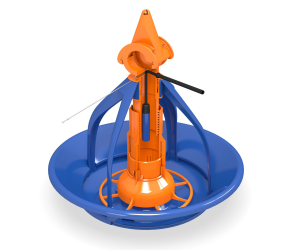
- Automatic (linear/cup) — part of automated poultry farming equipment. These are circular or tubular lines connected to a common feed hopper and ensure minimal human contact with the feed.
Regardless of type, the design features always include smooth, non-toxic materials (durable food-grade plastic), resistance to aggressive environments (moisture, ammonia) and ease of disassembly for regular disinfection.
Advantages of feeders for broilers
Investing in high-quality feeders for broilers quickly pays for itself by increasing feeding efficiency and reducing operating costs:
- Thanks to their well-thought-out design and sufficient number of feeders, fighting for food is eliminated. This is especially important for broilers, as competition causes stress, which negatively affects weight gain. Each bird receives its required portion, which ensures uniformity of the flock.
- Hygienic feed delivery prevents contamination with droppings, which is one of the main causes of the spread of infectious diseases. Providing clean, dry feed without obstruction stimulates appetite and accelerates feed conversion.
- Modern feeders for broilers are made of high-quality plastic or galvanised steel. Their design is collapsible, which allows for quick and high-quality sanitation — a necessary measure after each growing cycle.
- Special side walls, retaining rings and dosing systems minimise feed spillage. When you decide to buy a well-designed broiler feeder, you save significantly on feed, as the birds cannot scatter or contaminate it.
From simple hanging models to complex automatic lines, you can always find a solution that suits the scale of your production.
How to choose a broiler feeder?
Choosing the right broiler feeder is critical for successful fattening. Before you find out the price of a broiler feeder, determine the scale. For 50-100 birds, a few spacious bunker feeders will suffice. If you are raising thousands of broilers on an industrial scale, you need an integrated automatic feeding system.
Remember that birds must be able to eat freely at the same time, so you need to provide sufficient space for feeding:
- For a round feeder, it is customary to calculate 2.5–3 cm per adult bird. For linear trays, up to 10–15 cm.
- The feeder must provide the birds with feed for at least one day. For automatic systems, the capacity of the hopper must correspond to the daily requirement of the entire flock.
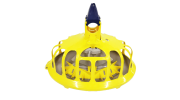
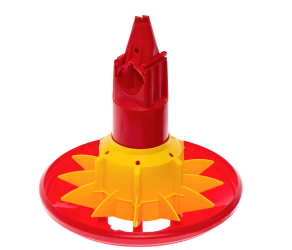
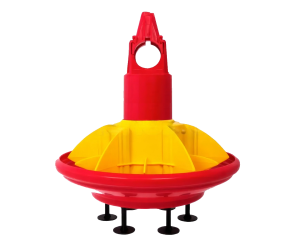
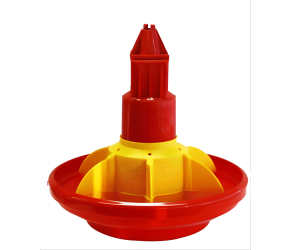
- Cup (plate) feeders are ideal for broilers because they provide easy access and minimise spillage.
The best feeders for broilers are made of virgin food-grade plastic or high-quality galvanised steel.
The material must be:
- Strong, capable of withstanding the weight of feed and mechanical stress from birds.
- Durable, resistant to corrosion, chemical disinfectants and ultraviolet light.
- Safe, non-toxic and free of sharp edges that could injure birds.
Choose models that are easy to disassemble for cleaning. For hopper models, it is important that the filling process is quick and does not require complicated manipulations.
Installation of feeders for broilers
The correct installation of feeders for broilers directly affects feed consumption and the final weight of the birds. One of the main rules is that the bottom edge of the feeder tray should be at the level of the back or slightly above the head of the broiler. Modern suspension systems have height adjustment mechanisms that allow the feeder to ‘grow’ with the birds. The distance between individual feeders or lines should be sufficient to prevent crowding.
Tips for organising space in the poultry house for even feeding:
- Place feeders and drinkers alternately throughout the poultry house to ensure equal access.
- The distance from the feeders to the drinkers should not be too great (usually 1-1.5 metres) so that the birds can quickly move from feed to water.
- Ensure uniform lighting throughout the feeding area.
Small farms often use suspended bunker feeders for broilers and rearrange them as the birds grow. Large industrial complexes use stationary, fully automated lines that ensure maximum labour and feeding efficiency.
Where to buy feeders for broilers in Ukraine?
If you want to maximise the profitability of your poultry farm, you need to buy the highest quality feeders for broilers. The VADA online store specialises in supplying modern and reliable equipment for poultry farming.
By contacting us, you get:
- proven, certified feeders for broilers that meet European quality standards and sanitary norms.
- company managers will help you choose the optimal type of equipment.
- thanks to direct deliveries, the company offers feeders for broilers at low prices.
VADA has comprehensive solutions for creating the ideal microclimate and organising effective poultry feeding. The range includes not only feeders for different types of poultry, but also automatic feed delivery systems, nipple and cup drinkers, ventilation systems for broilers, and microclimate control systems (heating, cooling).
The company provides prompt delivery of the ordered equipment to any location in Ukraine. Make broiler feeding easy and efficient — choose proven broiler feeders from VADA!