










-180x100.png)

To get chicken eggs regularly and consistently, it's not enough to just get some chickens. It's important to pick the right breeds with high egg production rates. Some chickens are real "egg factories," while others combine good egg production with meat productivity or decorative appearance. In this article, we will look at the best breeds of laying hens and advise you on which one to choose for your farm.
TOP 10 best laying hens
Leghorn
Chickens of this breed are real record holders in egg production, laying 280-320 eggs weighing 55-60 g per year. They adapt well to different climates, but are afraid of cold and damp rooms. On the downside, they do not have a brooding instinct.
Lohmann Brown
From the age of 4.5-5 months, these hens begin laying eggs weighing 63-65 g, reaching up to 320 eggs per year. However, such high productivity shortens their lifespan (3-4 years). They tolerate cold well, are calm and easy to keep.
Hisex White/Hisex Brown
They provide a high yield of quality eggs (280-320 eggs), tolerate heat well, but cold slightly less well. Like Leghorns, they do not become broody.
ISA Brown
They lay large eggs weighing up to 70 g (300-320 eggs), adapt well to different conditions, are peaceful and friendly, but have a short peak productivity period.
Rhode Island Red
They have slightly lower egg production compared to the previous breeds, but they are a more versatile breed with good meat and egg production, plus they have good maternal instincts. They are undemanding in terms of weather, tolerating both heat and cold equally well.
Minorca
Hens of this breed lay very large eggs weighing 70-80 g, up to 220 eggs per year. They are sensitive to cold, calm, and have a beautiful decorative appearance.
Amrox
These, on the contrary, adapt well to the climate and are hardy, laying 200-230 eggs per year. They are versatile in their properties (meat + eggs) and make good brooders. One drawback is that these laying hens are slightly inferior to crossbreeds.
Sussex
They are characterised by good egg production even in winter, are not afraid of the cold, are beautiful in appearance, and lay up to 220 eggs per year.
Kuchinskaya Yubileynaya
Perfect for the Ukrainian climate, they are unpretentious and productive, laying 200-250 eggs per year. These chickens are considered versatile and disease-resistant.
Adler Silver
This is a good meat and egg breed, frost-resistant. They lay up to 220 eggs per year.
So, if you need a large number of eggs, give preference to modern crosses (Loman Brown, Isa Brown, Hysex). For individual farms, you can choose versatile breeds of chickens in Ukraine: Kuchynska Jubilee, Amrox or Rhode Island.
Comparative table of laying hens
| Breed | Number of eggs/year | Average egg weight, g | Hardiness (climate resistance) |
| Leghorn | 280-320 | 55-60 | Well adapted, but sensitive to cold and dampness |
| Loman Brown | 300-320 | 63-65 | Hardy, tolerates cold and heat well |
| Hysex | 280-320 | 60-63 | Heat resistant, average frost resistance |
| Iza Brown | 300-320 | 65-70 | Highly adaptable, undemanding |
| Rhode Island | 200-250 | 58-62 | Hardy, easily tolerates various conditions |
| Minorca | 180-220 | 70-80 | Do not tolerate cold well, require warm premises |
| Amrox | 200-230 | 58-62 | Adapt well, hardy |
| Sussex | 180-220 | 56-60 | Frost-resistant, lay eggs even in winter |
| Kuchinskaya Yubileynaya | 200-250 | 58-62 | Disease resistant, well adapted to the climate of Ukraine |
| Adlerska Sriblyasta | 180-220 | 56-60 | Hardy, frost-resistant, undemanding |
What conditions are needed for maximum productivity of laying hens
Even the best breed will not produce high results without proper conditions. In order for chickens to lay eggs consistently, they need to be provided with appropriate conditions. What exactly is important? Lighting, ventilation, heating, feeding and watering. Let's pause here for a moment and discuss the most important points.
Lighting. Laying hens need 14-16 hours of daylight to maintain stable egg production. For this purpose, it is recommended to use modern LED systems with brightness control. VADA equipment allows you to create customised lighting programmes, such as smooth switching on and off, and imitation of sunrise and sunset. This minimises stress in birds and has a positive effect on egg production.
Ventilation systems. It is well known that ammonia and carbon dioxide are very harmful to chickens. The birds begin to get sick, eat less, and, accordingly, their egg production decreases. Therefore, VADA engineers recommend installing automatic ventilation with temperature and humidity sensors to maintain an optimal microclimate even in hot weather, evenly distributing air throughout the room.
Heating. If the temperature reaches +12°C, this automatically reduces the productivity of laying hens. This is because it is already cold and uncomfortable for them. It is best to keep the temperature in the poultry house in the range of +16+20°C. To ensure comfortable conditions, you should take care of heating in advance, which can be adjusted as needed.
VADA offers time-tested solutions for heating poultry farms that are energy efficient and create comfortable conditions during the cold season.
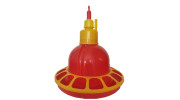
Automatic feeders and drinkers. A balanced diet and unhindered access to clean water affect the quantity and quality of eggs. Automating these processes helps to distribute feed evenly to the birds without overspending. And nipple drinkers keep the floor dry. VADA engineers offer feeding and watering systems for farms of various sizes to suit your individual needs.
So if you want to have a healthy flock of laying hens that will lay a lot of eggs, consider all the important nuances of their maintenance. And if you still have questions or need equipment, contact the experienced specialists at VADA: they will help you choose a model and, if necessary, install it on your farm.
03/09/2025