














-180x100.png)



23/10/2024
Decreased egg production syndrome-76 (DEPS-76) is the cause of shell-less eggs with hemorrhages, reduced chick hatching and low viability in the first two weeks. And this causes significant economic losses to farms due to a shortfall of up to 10-30 eggs per laying hen on average (about 50 eggs from breeding hens). This is reported by AgroTimes.
The degree of reduction in egg production in different flocks reaches 7-50%. Losses from NZN-76 increase due to the cost of restrictive measures, especially in breeding farms.
The causative agent of the disease belongs to the Adenoviridae family and is quite resistant to physical and chemical factors. In particular, its resistance in an alkaline environment is much higher than in an acidic one. The pathogen is most stable at a pH of 6-9. NWN-76 virus is easily exposed to UV radiation and photodynamic inactivation. It is insensitive to ether, chloroform, saponin and sodium deoxycholate. The virus is also resistant to 0.25% trypsin solution, 2% phenol solution, and 50% ethanol solution.
In the frozen state at -25 °C, the pathogen remains viable for more than three years, withstands repeated freezing and thawing, and does not lose its infectious properties during freeze-drying.
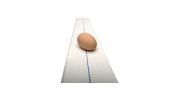
To ensure that the egg collection process is trouble-free, poultry farms use egg collection belts to increase productivity and reduce product losses.
23/10/2024