














-180x100.png)

Do you want your ducks not just to survive, but to grow quickly, get stronger and bring premium quality meat? The secret is not in magic supplements, but in smart feeding. Especially when it comes to mallard ducks, a breed with its own character and eating habits. This article contains practical tips, feed selections and feeding tricks that really work.
What do ducks eat?: the basics of the diet?
Ducks are very profitable poultry in the household. They grow quickly, are unpretentious to the conditions of keeping and gain weight well. But in order to achieve a good weight gain, it is important to properly organize their nutrition. It will vary by age, and each period of life will have different products. After 7 weeks of rearing, ducks can be transferred to intensive fattening. The diet should be high in carbohydrates and a moderate amount of protein, feed 3-4 times a day, gradually reducing the amount of greens so that the fat does not thin out.
The rapid growth of ducks is influenced by quality starter feed in the first three weeks, a balanced diet with sufficient protein, fresh water at all times, spacious walking and access to green grass, as well as cleanliness in feeders and water dishes - so that there are no infections that inhibit growth.
What to feed ducks so that they grow quickly?
In order for ducks to gain weight well, their diet should be balanced in terms of proteins, fats, carbohydrates, minerals and vitamins.
- Proteins are the basis of muscle growth, they should be 16-20% for young birds and 14-16% for adult birds. These are soybean or sunflower meal (cake), legumes, meat and bone or fish meal, fodder yeast, boiled egg, fermented milk products at an early age. Without a sufficient amount of protein, ducks grow slowly and become lethargic.
- Fats are the source of energy and the formation of subcutaneous fat, their norm is 3-5% in compound feed: whole corn, bran, sunflower seeds, fish meal.
- Carbohydrates (up to 60% of the diet) should consist of grains, boiled vegetables, bran. Carbohydrates provide energy for movement, growth and fattening.
- Minerals are necessary for bones, plumage and metabolism. Calcium, phosphorus, and sodium are among the most important.
- Vitamins affect appetite, growth and healthy appearance: greens, vegetables, premixes and fish oil as a source of vitamin D.
What kind of grain can be fed to ducks
Properly selected grains provide birds with everything important for health.
| Grain | What is useful |
|---|---|
| Corn | The most caloric, promotes weight gain, is easily absorbed |
| Wheat | It is good to eat, contains proteins and B vitamins |
| Barley | It has a lot of fiber, it is better to give it chopped or steamed |
| Oats | Promotes digestion, good for young animals |
| Peas (forage) | A source of protein, but must be introduced gradually |
| Sorghum | Rich in energy, a substitute for corn in regions with its deficit |
| Wheat bran | A source of fiber, vitamins and trace elements |
It is recommended to alternate grains, make mixtures, grind or steam barley and oats for better absorption.
Moldy or spoiled grains, raw and green potatoes, sweets, bread in large quantities, kitchen waste, dirty and cold water should be avoided.
Peculiarities of feeding of mallard ducks
Not everyone knows what to feed mallard ducks right, so that their meat is juicy and their growth is uniform. Shypins, or musky, are not quite an ordinary breed. They do not croak, but hiss, hence the name. They are popular due to tasty dietary meat, undemanding to feed and good productivity.
Their growth rate is slower than that of Peking ducks, the weight of males reaches 4-6 kg, females - 2.5-3.5 kg by 3-4 months. They eat less, but the quality of the feed must be high. They graze well, so they can get up to 40% of their diet from greens.
How often and when to feed ducks?
- Ducklings (up to 3 weeks old) are fed 5-6 times a day.
- 3-4 feedings are enough for teenagers: in the morning, afternoon, evening, and if desired, a light feeding before bedtime.
- Adult ducks are fed two or three times a day: in the morning, afternoon and evening.
- Evening feeding should be the most caloric - that's when ducks store energy in the form of fat.
- Water must be available at all times! Ducks do not eat without water, especially when consuming dry feed. Without access to clean water, their appetite and digestion deteriorate.
Why is it important to properly organize the feeding process?
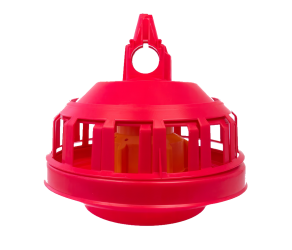
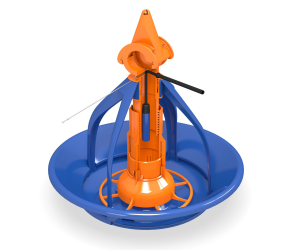
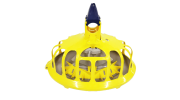
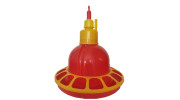
When ducks eat simply from loose feed or improvised bowls, they often scatter grain, trample the mixture with their paws, contaminating the feed with droppings or water. And special "duck feeders" have protective sides or dispensers that prevent spillage and contamination of food. So it is spent on growth, not "on land".
In addition, with a feeder, it is easier to dose portions, monitor the appetite of ducks, prevent overeating or, on the contrary, underfeeding. And it is easier for the birds to get food, which stimulates active eating, it is more convenient for the farmer to wash and fill the feeders than to constantly clean spilled food from the ground or floor. You can organize zonal feeding: for ducklings - smaller feeders, for adults - long or round.
In feeders with the correct placement of feed, the bird will not fight for food, getting nutrients evenly. It is also convenient that there are feeders for dry compound feed, wet mixes, as well as automatic bunker models that ensure a constant supply of feed.
The "VADA" company has an assortment of different types of feeders from proven manufacturers, all products are certified. Contact our online store - we will help you with the selection and all settings.
31/07/2025