



















-180x100.png)

Light in the cowshed is not just a matter of comfort or convenience for staff. It is an important production tool that directly affects the health of animals, their productivity, reproductive function and the overall condition of the herd.
It has been proven that the right lighting regime can increase milk yield by 8-15% and improve insemination results. Why is natural light not enough, and how can artificial lighting be organised correctly?
Why turn on the lights?
Modern cowsheds are large, spacious rooms with a minimum number of windows, which are often located high up under the roof and do not provide uniform lighting throughout the entire area. We can also mention the short days in winter and autumn, when the length of daylight hours is reduced and there is a lack of light. This affects the hormonal balance and all possible consequences. Thus, lighting affects the biorhythms of cows, influencing the functioning of their endocrine system. Depending on the duration and intensity of daylight, hormone production changes. That is why responsible farms plan their lighting regime as carefully as they plan feeding and veterinary care.
How lighting affects milk yield and reproduction
Like humans, cows have daily rhythms (circadian rhythms) that depend on the change between day and night. The right lighting regime helps animals maintain normal metabolism, reproductive function and behavioural responses.
What is the secret? Light stimulates the production of the hormone melatonin at the right times of the day, which regulates circadian rhythms and affects productivity, as well as improving appetite and activity in cows.
When daylight is artificially extended, melatonin levels decrease and hormones that stimulate lactation (in particular, prolactin) have a more active effect on the body. The lighting regime also regulates the hormonal system responsible for the sexual cycle of cows. Its optimal duration normalises the oestrus cycle (oestrus) and facilitates insemination.
Light is a production tool
Today, light is no longer just an element of comfort or convenience for staff. It has become a powerful production tool that directly affects the economic performance of a farm.
Poor or insufficient lighting is more expensive in the long run from a production point of view. It is important to consider its intensity, colour temperature, placement and daily control, and above all, intelligent lighting control.
What is colour temperature? It is an indicator that determines the shade of light — from warm yellowish to cool blue — and is measured in Kelvin (K):
- 2700-3000 K — warm light (yellow);
- 4000-4500 K — neutral white;
- 5000-6500 K - cool blue-white light. This is the recommended level for cowsheds, especially in housing areas and milking parlours. This is so-called daylight, which is as close as possible to natural daylight, to which cows are evolutionarily programmed. Accordingly, it is well perceived by animals, as cows better distinguish between blue and green shades (400-500 nm).
During the dark period (6-8 hours per day), the lighting should be completely turned off or minimal red spectrum (if emergency lighting is required). It has almost no effect on the daily rhythms of cows, does not interfere with melatonin production, and therefore does not disturb the animals' rest.
Lighting from VADA - a smart choice for farmers
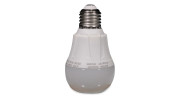
VADA offers LED lighting specially designed for agricultural premises: piggeries, cowsheds, poultry houses, etc. Our lighting systems are durable, easy to install and optimised for each type of animal and building design. We select industrial luminaires from the best manufacturers on the market. Because proper lighting is not a question of watts, but of results. And we know how to achieve this, because we have high-quality, field-tested equipment, professional support from selection to installation, and a flexible pricing policy.
02/06/2025